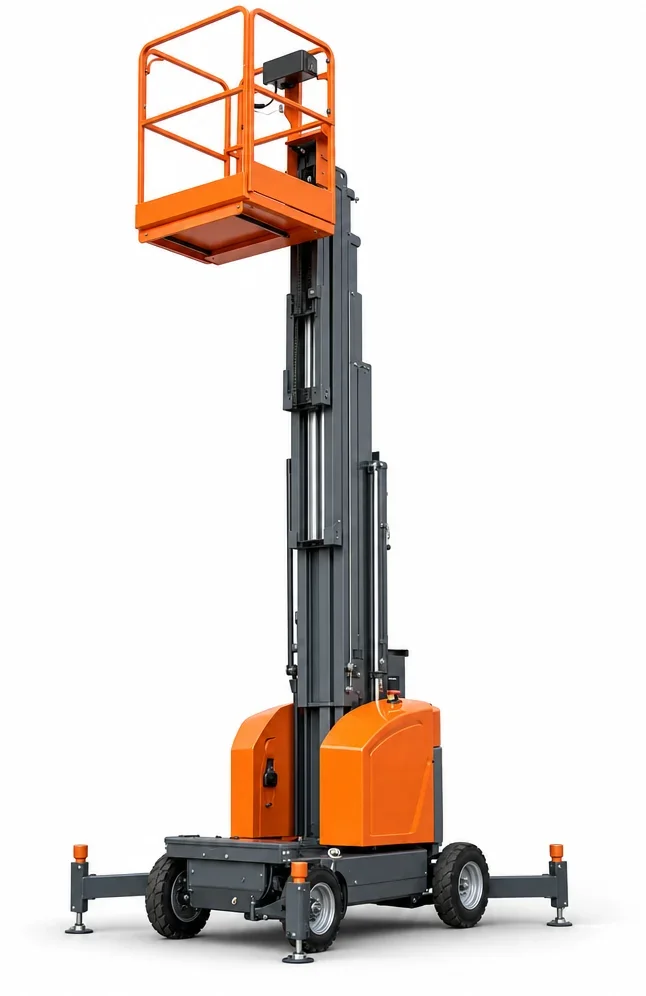
Where vertical masts make sense
Use a vertical mast when the task sits directly overhead and the machine must pass through narrow doors or aisles. They are sized for polished concrete and controlled indoor routes in distribution and manufacturing spaces.
Planning questions: - Can the machine sit right below the task without outreach? - What is the narrowest doorway, aisle, or pinch point along the route? - Are there ramps, thresholds, or floor transitions that affect ground clearance?
Local considerations: floors, thresholds, and moisture
Chattanooga’s regional climate can leave moisture at docks and building joints. Non-marking tires and low ground clearance favor clean, dry slabs. Check floor load limits on mezzanines and elevated platforms before routing. Actual conditions, the selected unit’s instructions, and site procedures govern use.
Measurements that define the model
- Platform height needed to reach the task with comfortable working room
- Stowed width and length relative to aisles and door frames
- Weight versus slab capacity on upper levels
- Turning radius at intersections and around racking ends
Typical Chattanooga use cases
- Lighting, sensor, and sprinkler head work in high-bay interiors
- Inventory cameras or signage along narrow cross-aisles
- Quick service tasks inside facilities where downtime at dock lanes must be minimal
For wider platforms or higher slab-only access, compare /electric-scissor-lift-rental/. If obstacles block a straight lift, consider /articulating-boom-lift-rental/.