Layout and purpose
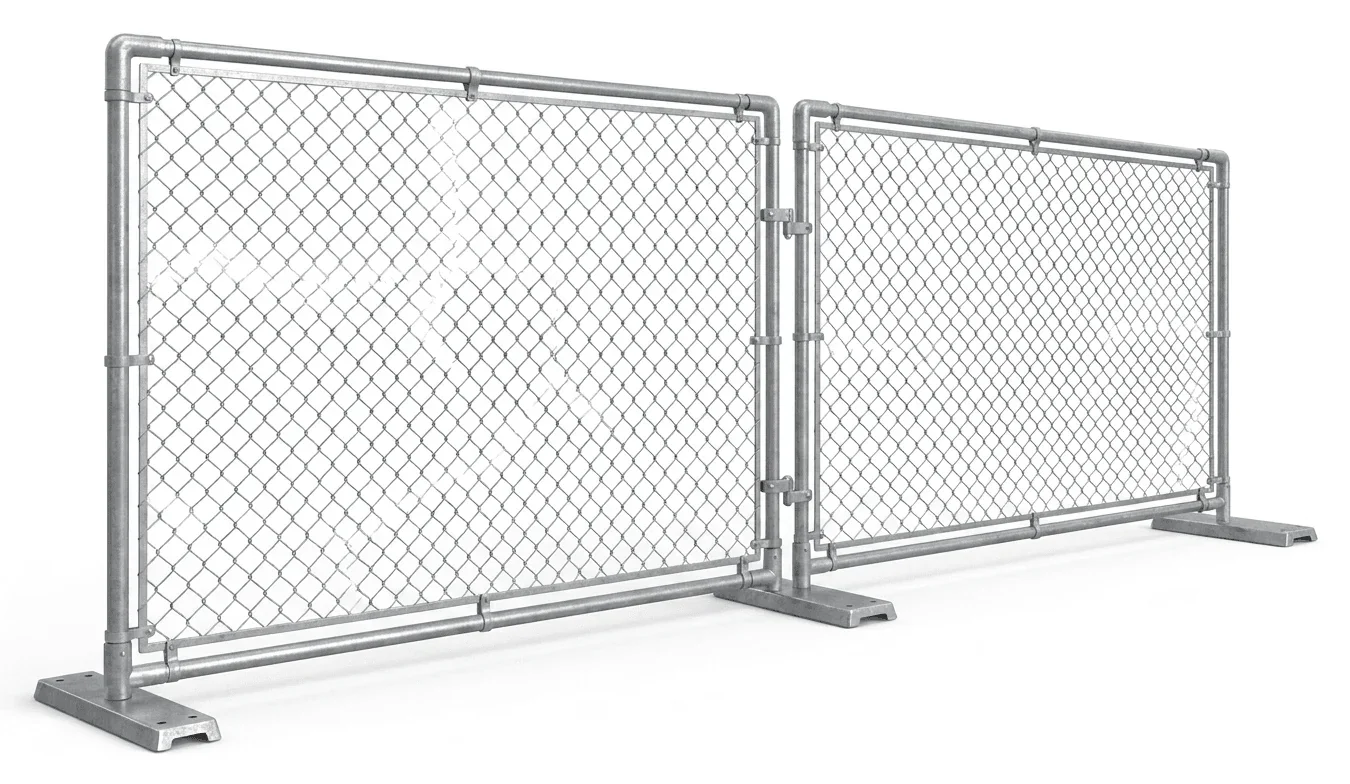
- Define whether the goal is perimeter security, material segregation, or pedestrian and vehicle separation at active docks.
- Measure run lengths, corner counts, and required gates. Note clearances for lift travel and truck swing at entries.
Surface and terrain in the river valley
Temporary panels set on asphalt, concrete, gravel, or turf will behave differently under Chattanooga’s frequent precipitation. Soft or sloped ground can shift bases and reduce stability during storms. Plan for flat stretches where possible and account for grade breaks before placing long, straight runs.
Access routes and adjacent equipment
Where aerial lifts or telehandlers operate near fencing, confirm the stand-off needed for swing and fork reach. At distribution sites, barricades often separate foot traffic from truck flow; leave sightlines at crossings and keep corners wide where trailers pivot.
Weather and durability
Humidity and steady rain influence the choice of materials, site-stability factors, and connections. Wind loads rise along exposed ridges and open yards; panel spacing, bracing, and gate placement should reflect the openness of the site rather than a generic yard condition.
Coordination with other site products
- Power for lighting at gates or crossings may require cabling; see /generators-light-towers-rental/.
- Storage for small tools or PPE near entries may call for a nearby container; see /storage-containers-rental/.
- If elevated work happens inside the perimeter, align routes with /aerial-lift-rental/ options to reduce conflicts.
Actual conditions, the selected system’s instructions, and site procedures govern any exterior setup and work near barriers.